







By Breckan Winters, NRCDV Communications Manager
This was the question that the Domestic Violence Awareness Project advisory group asked ourselves at our annual Domestic Violence Awareness Month (DVAM) planning meeting this year. How can we best show up for survivors right now? How can we assert our unapologetic unity with both survivors and those who serve them, during what feels like a time of significant turbulence and scarcity in domestic violence and related fields? As we dreamed up possible taglines and campaign imagery, our core messages felt crystal clear:
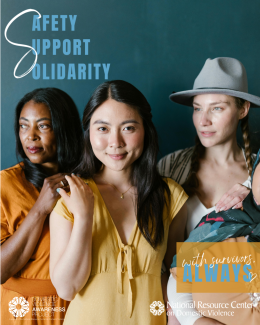
Survivors deserve safety. Survivors deserve support. Survivors deserve solidarity.
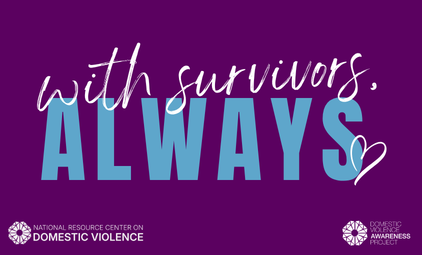
We are with survivors, always.
When things feel scary and the future untenable, we can ground ourselves by going back to our core values. We are here for survivors – in fact, most of us advocate because we are survivors. As “both a love letter and a call to action for those committed to advocating for survivors’ needs and rights,” this year’s theme for DVAM invites you to share what standing with survivors, always looks like to you.
Survivors deserve safety
 What does “safety” look like to you? Freedom from violence? A roof over your head? When we say that survivors deserve safety, we mean that all survivors – and in fact, all people – deserve to live in safety and dignity, however they define it for themselves. This can include, but is not limited to:
- Physical safety: freedom from violence, safe housing, adequate food, access to medical care
- Emotional safety: trusting and respectful relationships, being able to express thoughts and feelings without judgement or ridicule, feeling a sense of belonging
- Financial safety: stability, access to finances, freedom from housing/food insecurity
Survivors deserve support
Like safety, there is no one-size-fits-all definition of support for survivors. Often the most important thing you can do to support the survivors in your life is to simply be there for them, without judgement or expectation. If you are an advocate or other helping professional, you likely know this already, as supporting survivors is a huge part of your work. That said, we can all find ways to support the survivors in our lives, regardless of our profession.
Support can look like:
- Checking in, without expectation of response
- Listening to them
- Centering their autonomy – asking them directly how you can help, and then doing what you can to support them accordingly
- Providing a tangible offer of support (i.e., “Would you like me to babysit for you while you go to your appointment?” or “Do you want a ride to the grocery store?”)
- Simply affirming, “I believe you"
Survivors deserve solidarity
In her recent blog post for DVAM, Casey Keene reminds us that “nobody should have to stand alone in the face of hardship.” Solidarity with survivors looks like action. That is, standing up against violence and injustice, engaging in mutual aid networks, giving your time and resources to the programs that survivors in your community rely on. Investing in efforts to prevent violence – building collaborations, fostering community connectedness, and more – is solidarity with survivors.
Taking action for DVAM 2025
 Ivonne Ortiz reminds us that “As advocates, even when we feel we have nothing else to give, we can cultivate hope.” We can do this by remaining rooted in our values and our unapologetic unity with both survivors and those who serve them. This October, we invite you to affirm your commitment to safety, support, and solidarity with survivors across all backgrounds and experiences. Here are some ways that you can learn more and take action throughout DVAM 2025:
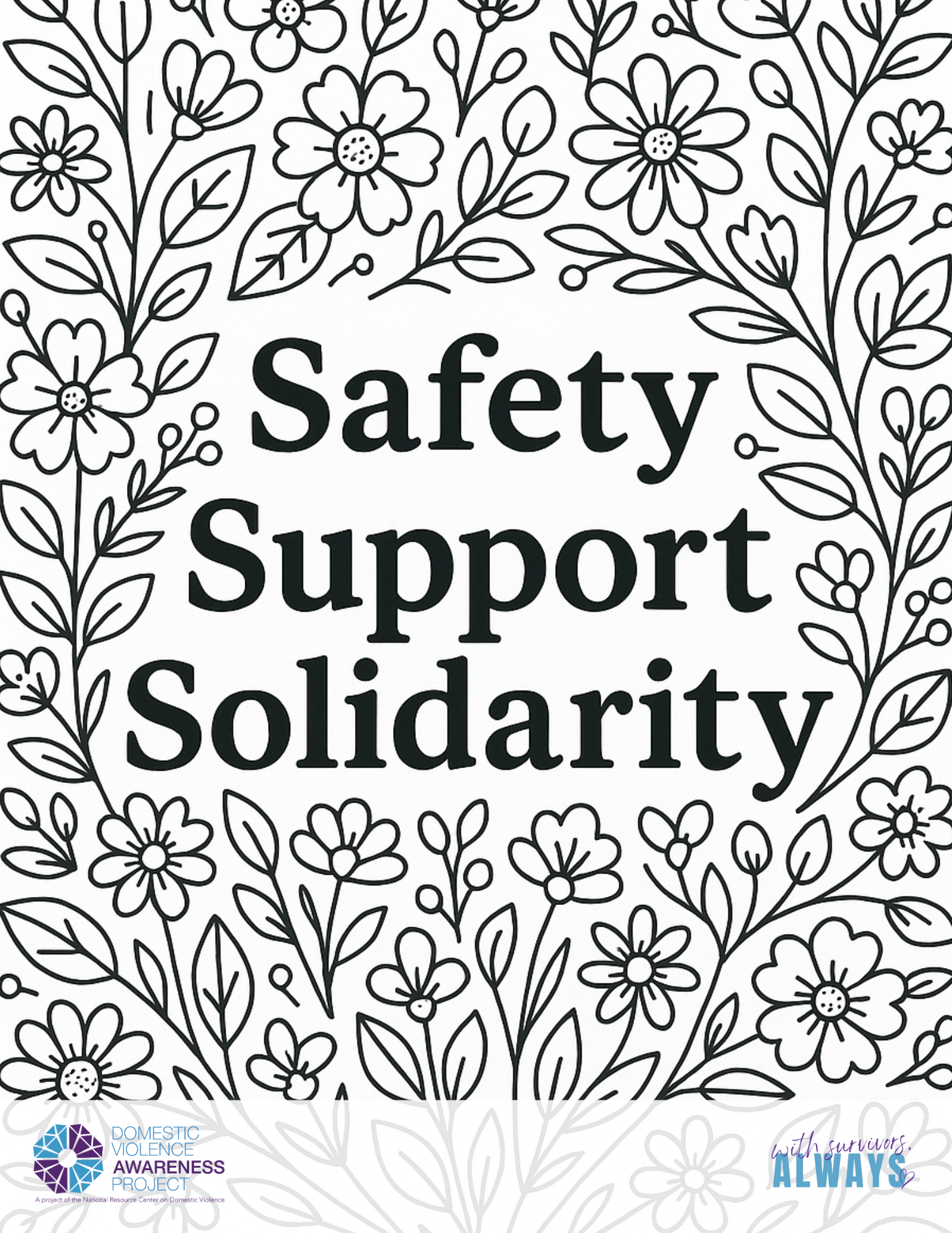
- #WithSurvivors social media campaign: Access campaign imagery in English and Spanish, sample posts, coloring pages, rally signs, and more from the With Survivors, Always campaign page. Be sure to share across social media channels with the #WithSurvivors and #DVAM2025 hashtags!
- Register now: Domestic Violence 101: Back to Basics Webinar - Join us on October 1 as we launch DVAM 2025 with our signature DV 101 webinar. REGISTER HERE
- Blog post: With Survivors, Always: DVAM 2025 - Learn more about the With Survivors, Always campaign and view a full list of related activities for DVAM on the Awareness Highlights blog on DVawareness.org.
- Podcast: With Survivors, Always: Preparing for Domestic Violence Awareness Month 2025 - Check out our latest podcast, as NRCDV’s Patty Branco and Breckan Winters unpack the theme for DVAM 2025, With Survivors, Always, and introduce this year’s campaign materials and engagement opportunities.