








By Vanessa Corwin, Housing Program Specialist at National Resource Center on Domestic Violence
Domestic violence survivors are uniquely impacted by the child welfare system. In some states, exposure to intimate partner violence is considered a reportable harm to children, requiring notice of the child welfare system (CWS). Abusive partners may also threaten to report survivors to CWS, essentially utilizing the system as a tool for power and control. Once involved in the system, domestic violence survivors may face repercussions for how they maintain safety and housing, such as remaining in the relationship. Many domestic violence survivors are fearful of CWS involvement, and understandably so. Children may be more likely to be removed from the home in child welfare cases that involve intimate partner violence. Survivors of color are disproportionately impacted, with Native American and Black children over-represented in child welfare cases and home removals.
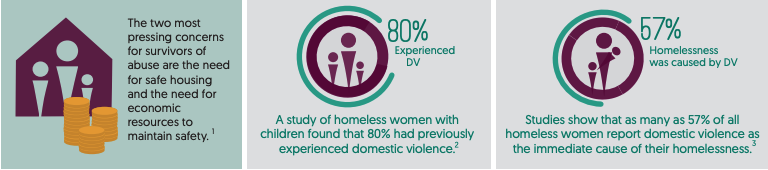
Housing insecurity and homelessness increase a family’s likelihood of child welfare involvement and child removal. Additionally, these are often a barrier to a family’s reunification with children who have been placed outside of the home. In fact, according to the National Center to Advance Peace for Children, Youth, and Families, “poverty has also been found to be the best predictor of child removal, with ‘inadequate income’ serving as a primary determinant in removal decisions.” We know that domestic violence survivors experience barriers to safe and stable housing as a direct result of the abuse, and that a majority of women experiencing homelessness have survived domestic violence.
Between 1/4 and 1/3 of youth and young adults experiencing homelessness have a history in the foster care system. According to the Voices of Youth Count, this included not just the youth who have “aged out” of foster care, but also those who had reunified with families and those who were adopted. Many of the participating youth cited their entry into foster care as part of a “larger pattern of instability that included homelessness with their family.” Additionally, homelessness can cause substantially higher risk of experiencing dating violence and other forms of harm.
What can service providers do to address this issue?
Domestic violence, homelessness, and foster care entry are all preventable. Here are three ways that service providers can work to support survivors and their children to maintain safety and housing:
Understand your mandated reporting requirements: Survivors have described hesitation in seeking supportive services due to fear of triggering a child welfare investigation. Regardless of your profession, it’s important to be clear on what you will report to CWS and to communicate that to survivors so they can make an informed decision about the information that they disclose to you. Organizations should ensure their staff have both clarity on mandated reporting requirements and an understanding of the impact of mandatory reporting on domestic violence survivors and their children.
Implement trauma-informed, family-centered services: Domestic violence often impacts the relationship between a survivor and their children. Service providers can take a family-centered approach to advocacy and safety planning, bolstering the relationship between a survivor, their identified family, and their children. Witnessing domestic violence is traumatic for children, but so is family separation.
Address the housing needs of families: Family poverty should not be the reason for suspected maltreatment and involvement with the child welfare system. There are some families who may simply need economic supports to maintain housing, and others may have co-occurring needs, including domestic violence services, who could benefit from supportive housing. Assessment of needs and appropriate provision of services may prevent families’ CWS involvement, child removal, and delayed reunification.
Conclusion
Through data and survivors’ stories, we know that housing instability, domestic violence, and involvement in the child welfare system are deeply intertwined, yet these sectors are often siloed and treated as separate issues. Domestic violence service providers, child welfare professionals, and housing staff must engage in coordinated responses to ensure timely ability to meet families’ safety needs. Safe housing is lifesaving for domestic violence survivors and is necessary to keep children and survivors together.
For more information:
- Domestic Violence and the Child Welfare System: What Domestic Violence Advocates Need to Know (National Resource Center on Domestic Violence)
- Missed Opportunities: Pathways from Foster Care to Youth Homelessness in America (Chapin Hall)
- How Do Homeless and Housing Instability Impact Families Involved with Child Welfare? (Casey Family Programs)
- Supportive Housing for Families in the Child Welfare System: Key Model Components and Future Directions (Urban Institute)
- How Can Supportive Housing Improve Outcomes for Families in the Child Welfare System? (Casey Family Programs)
- Worksheet: Menu of Housing Interventions for Families (CSH)